
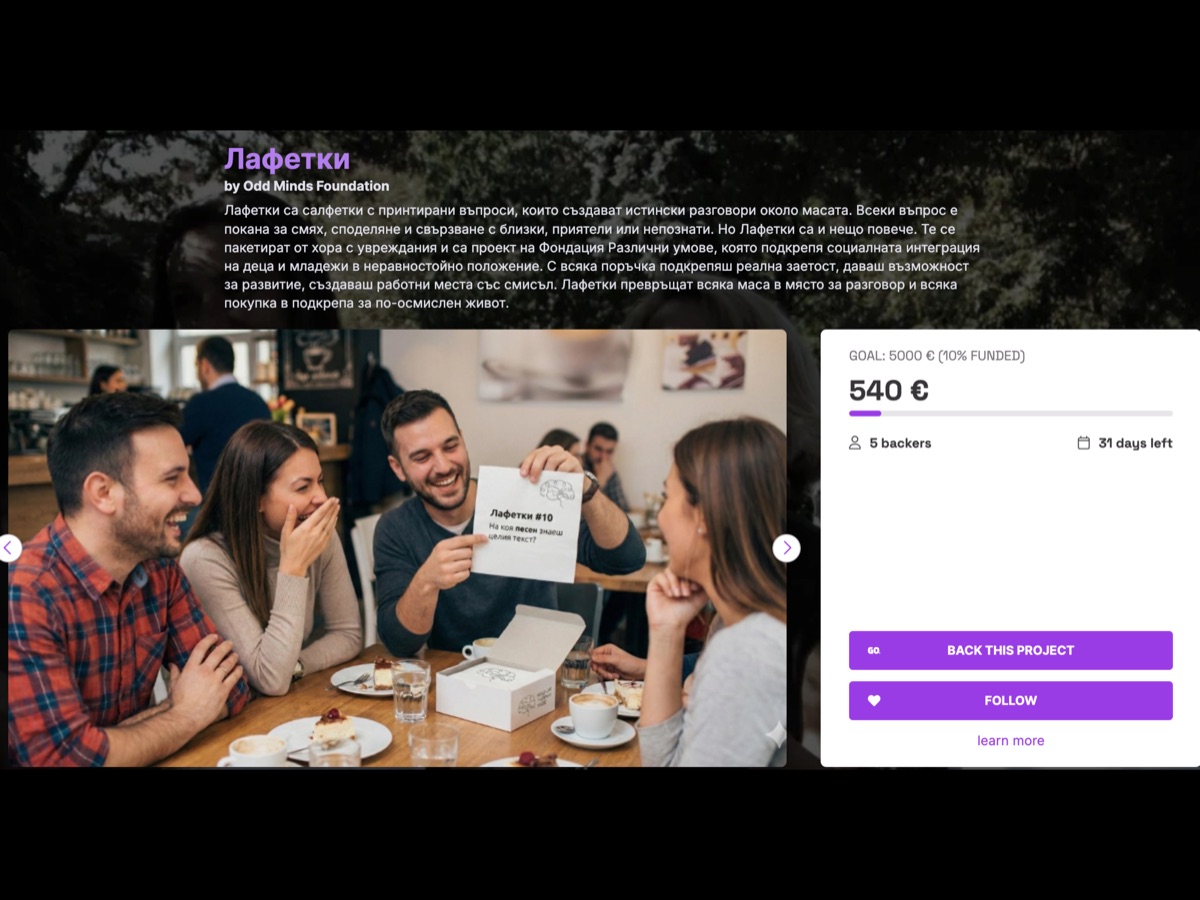
Happy May Day! (And how IndieGoGo turned into Indie-No-GO) ✨
1. The IndieGoGo Lesson: When Plan A Becomes Plan B
In our IndieGoGo campaign to fund our Lafetki project, we have raised €540 so far. Thank you so much for your trust and support! However, with a target of €5,000, the chance of raising the remainder by the end of the campaign in a month’s time is negligible. In such cases, IndieGoGo refunds the money to everyone who has made a donation. For us, IndieGoGo has turned into IndieNoGO. This is by no means pleasant news, but it is not catastrophic either. Because it has led us to the following: we have decided to move the campaign directly to our website. Over the next 1–2 weeks, we’ll set up a similar system and will be able to collect donations on a ‘whatever we raise’ basis.
Bonus: Instead of an 8% fee for the IndieGoGo platform, we’ll only pay 1%. Every donation will go directly towards barcodes (€210) and printing the next series of ‘Lafetki’ (around €200). So: every cloud has a silver lining!
2. Launch party for “Lafetki”: we’ll let you know the date and venue very soon!
Work, work, but we need a bit of fun too! At our party there’ll be stand-up comedy (performed by representatives of the Foundation) and, together with the team, we’ll ‘act out’ the questions from Lafetki – just so you can get to know us and have a laugh together!
3. We’re now ‘official’ and issuing invoices!
Today (1 May) is the perfect time to boast a bit about our administrative progress. We’re now issuing invoices and donation certificates via the website. This is a tedious but very important step in our transformation into a social enterprise. The rule is: if you issue an invoice, you make a profit, and consequently you pay tax on it. And once we reach a turnover of €7,500, we’ll be able to submit our application to register as a social enterprise.
4. Financial puzzles
This week we worked hard on the foundation’s financial model:
-
How much money do we need to deduct from the price of the products we sell to cover card payment fees and profit tax?
-
How does the model used by other foundations apply, whereby 10% of donations is retained to support the foundation’s operations?
-
What funding opportunities do we have and what documentation do we need for them?
Some answers are still unclear to us, but we are looking into everything.
Thank you for your support!